Book Description

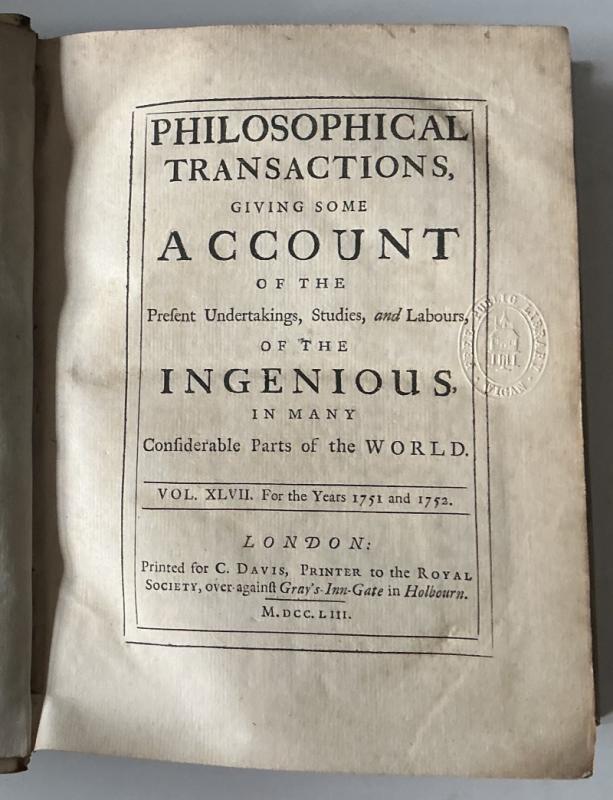
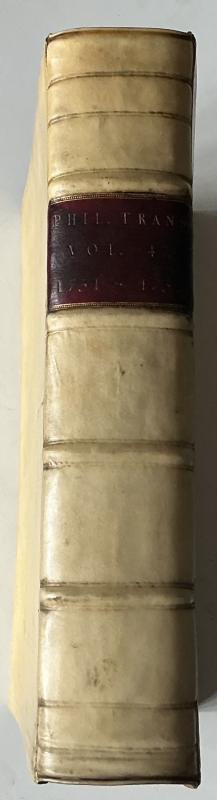
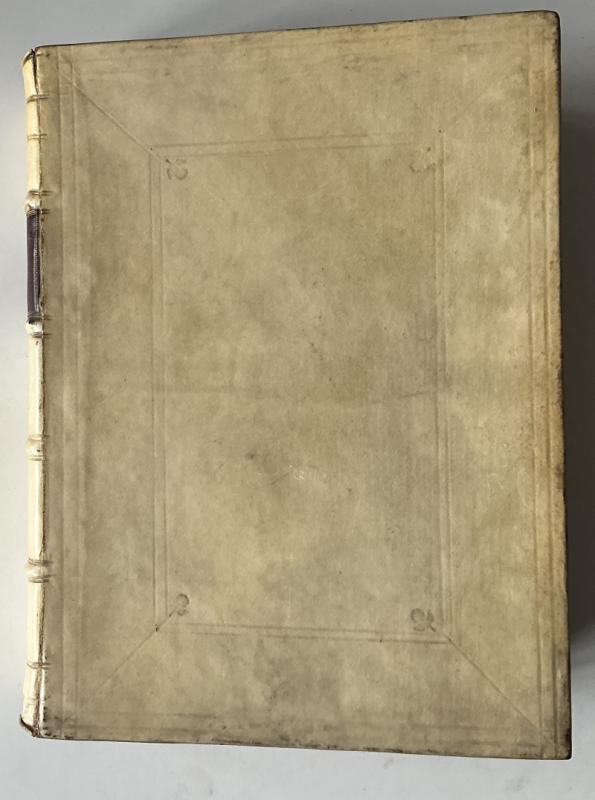
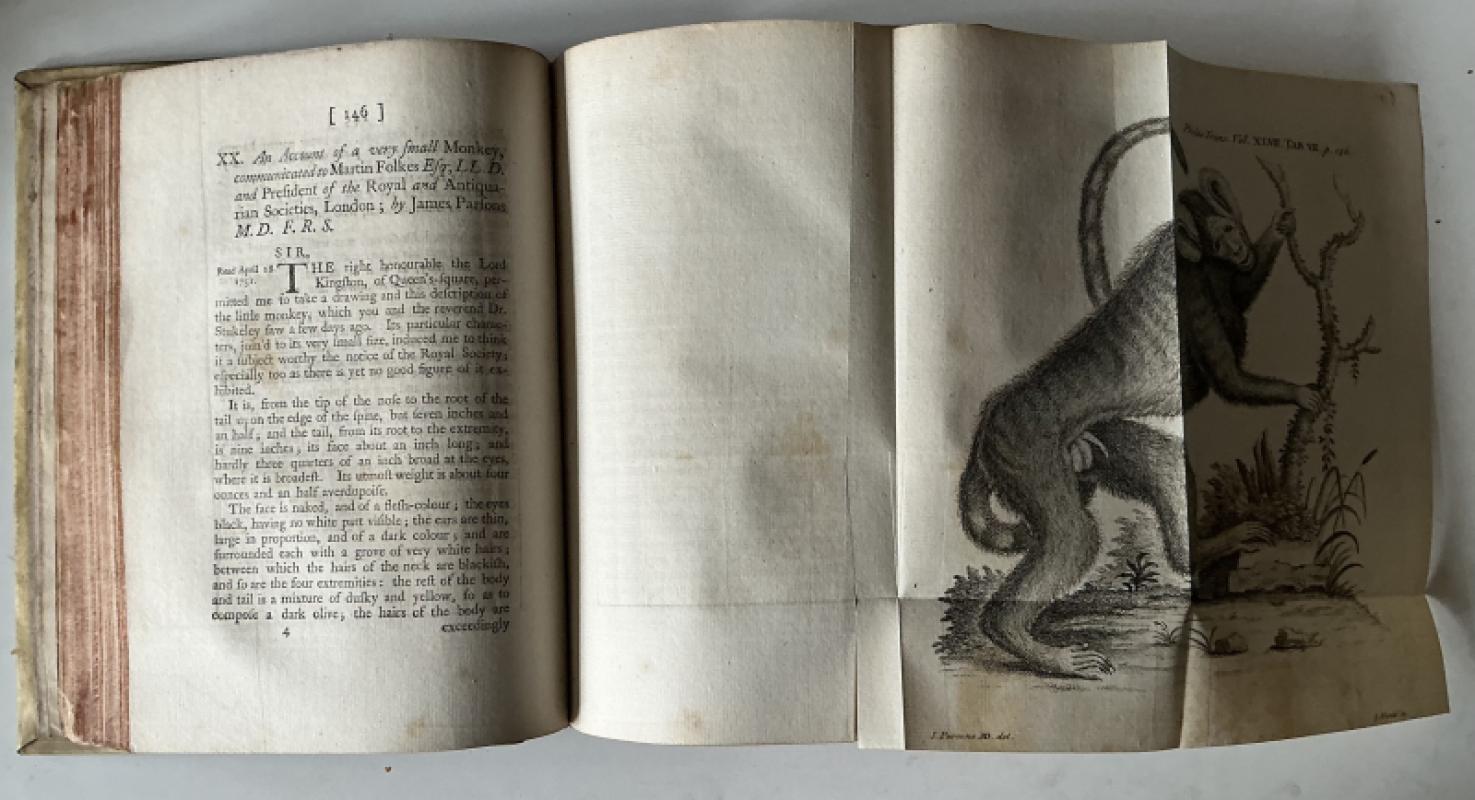
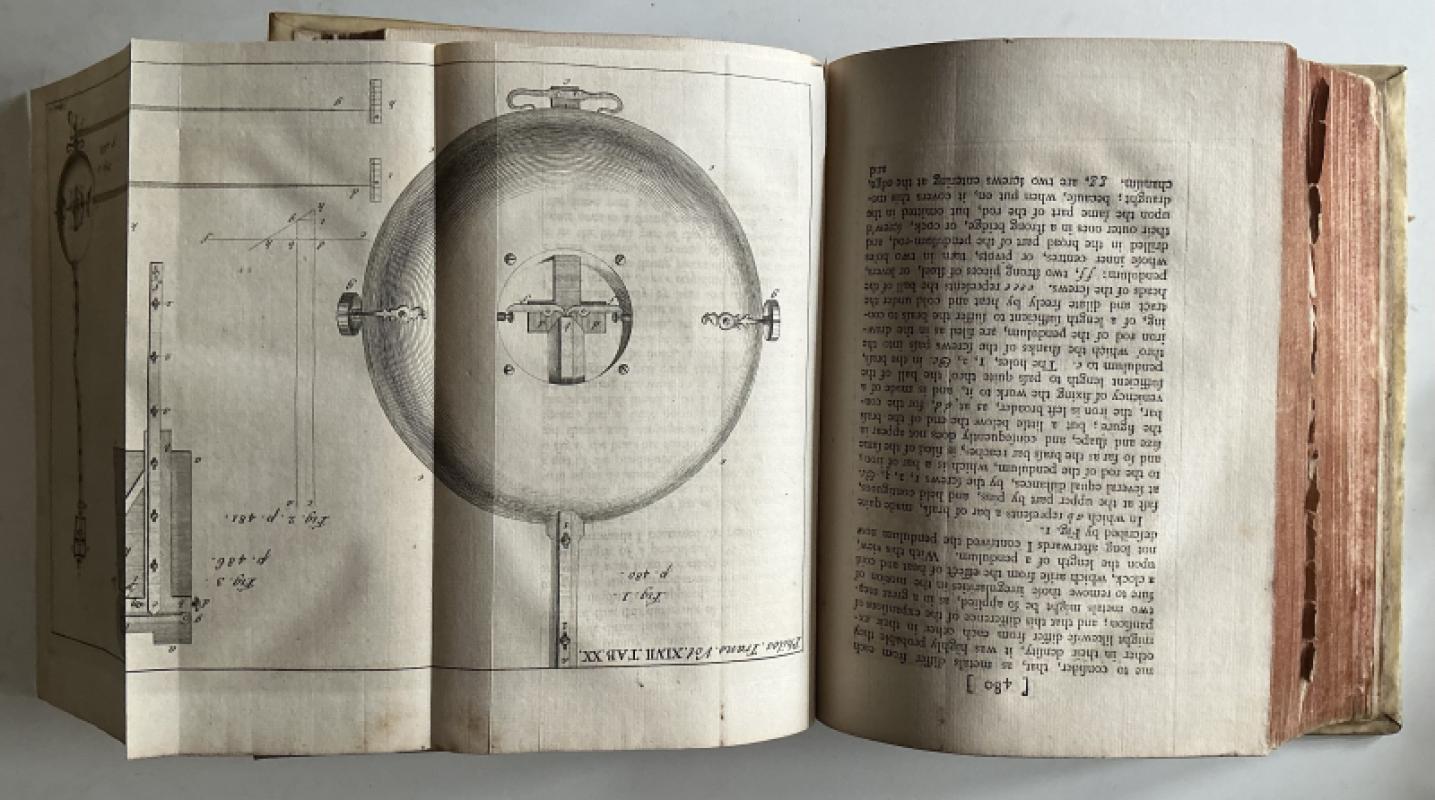
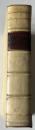
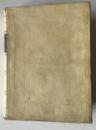
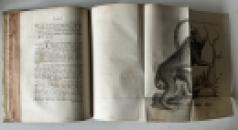
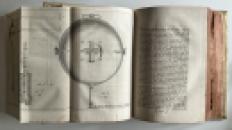
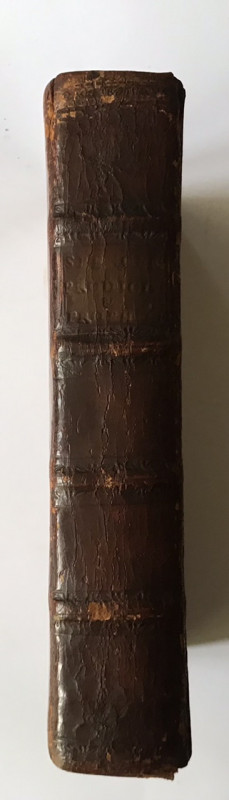
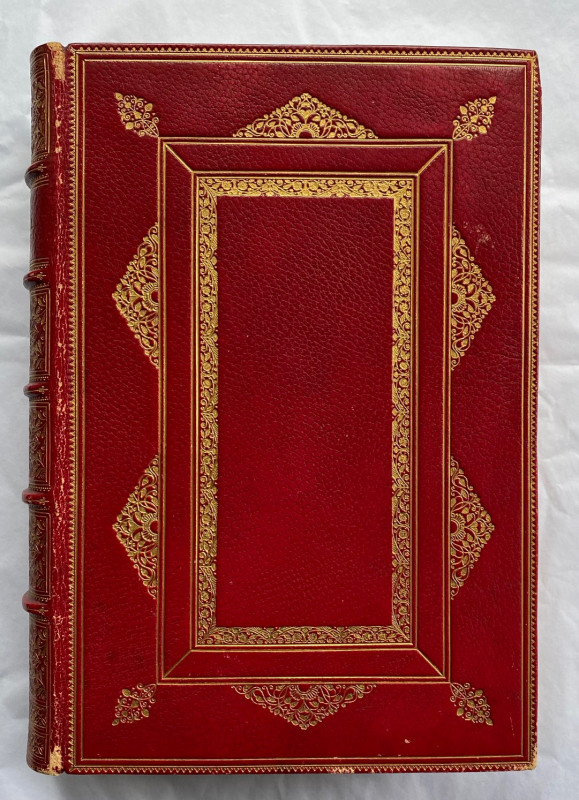
First edition. 4to. [xviii], 571, [16] (index and errata); extra leaf *438*439 inserted between 438-439. The usual leaf with the advertisement to the Reader, containing the Royal Society disclaimer, appears twice, in slightly different settings: the first without a signature, the second with the signature a. Plates as numbered I-XX plus folding plate of General Bill of Wedding Numbers between 340-341 (plate 1 appears opposite page 75, after plate II opposite page 38; plate XVI appears opposite page 371). Contemporary or near contemporary full stamped vellum, with contrasting label, edges speckled red. Bookplate of N. Vansittart to front paste-down, label Winnard's bequest to flyleaf, unobtrusive blind stamp to title and final leaves, neat number 2298 to the verso of the title page, paper flaw to corner of page 150 with loss of paper but without affecting text, occasional browning as usual but overall a nice example, collated complete and correct. As well as Franklin articles in this volume include: A general method for exhibiting the Value of Algebraic Expression. (A demonstration of Newton Binomial theory) by T Simpson, Canton on making artificial magnets, Walpole describing his own experience with bladder stones, on the mean motion of the moon according to Newton by Patrick Murdocke, Francis Blake on steam-engine cylinders, Henry Eeles concerning the cause of thunder, Account of Phaenomena of Electricity by William Watson, and an engine for raising water by fire, being an improvement of Savery's Construction by De Moura of Portugal, and so on.
Dealer Notes
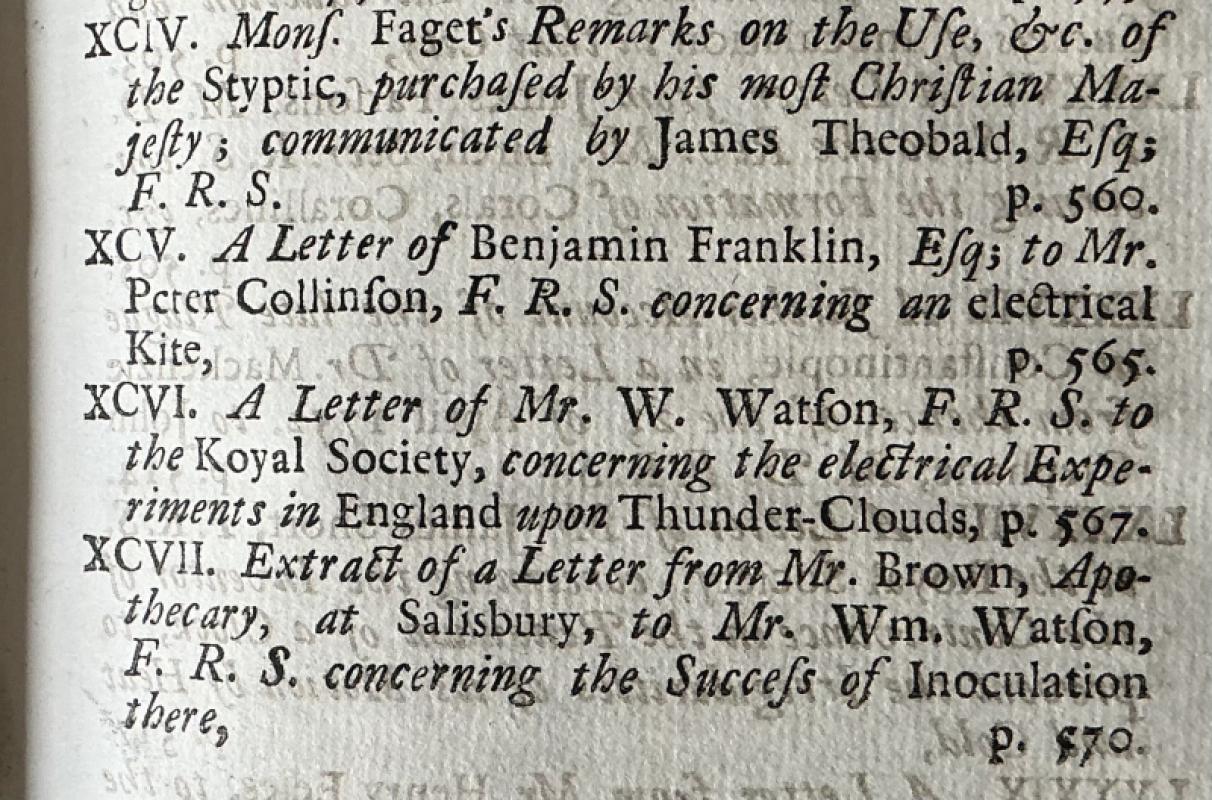
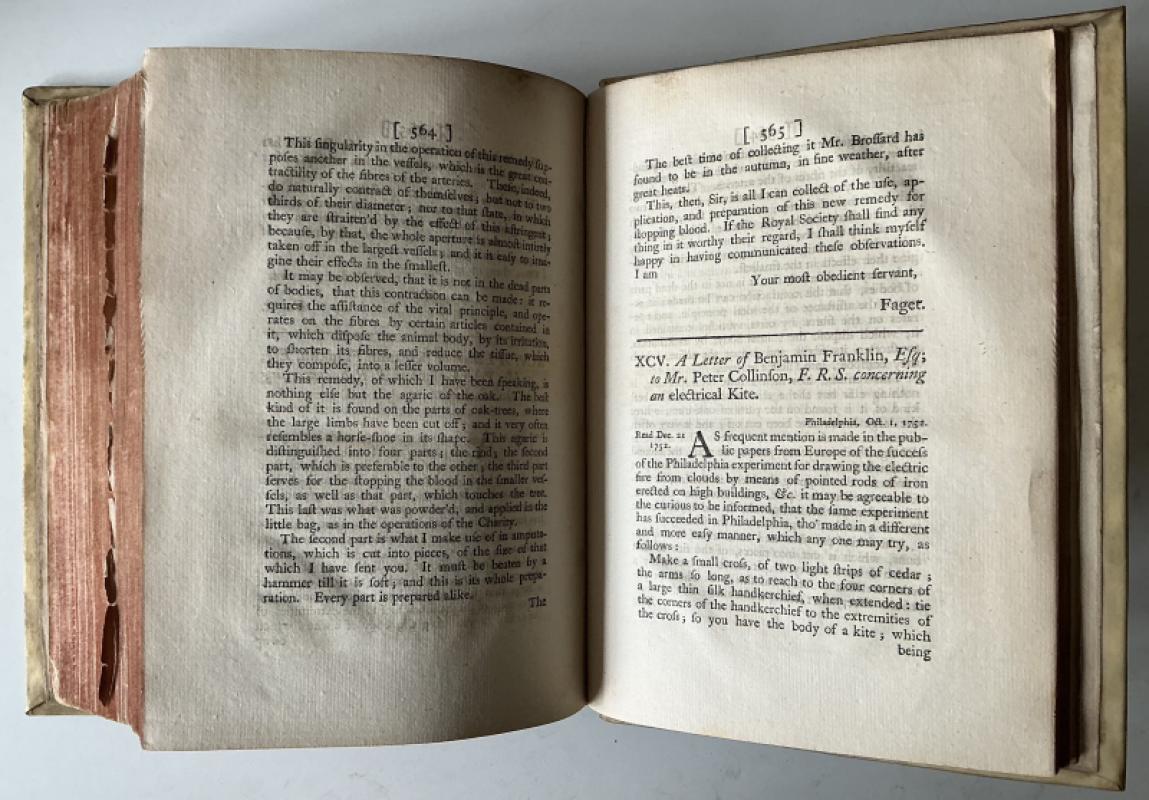
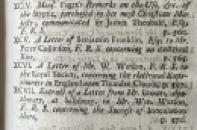
A remarkable volume, one that arguably marks Franklin's breakthrough as a world-class scientist. Rare on the market and difficult to find complete. Benjamin Franklin (1706-1790) was one of the founding fathers of the United States and a remarkably gifted eighteenth century figure, showing talent variously in business, publishing, diplomacy, statecraft and science. Widely respected in London as well as the US, he developed close ties with the Royal Society, which now has a medal named after him. Here we see a fascinating aspect of his genius in physics. The middle of the eighteenth century was a time of great progress in understanding the nature of electricity, one in which Benjamin Franklin played a leading role. In this seminal volume, his ideas are discussed (Article XXXI An account of Mr Benjamin Franklin’s Treatise, lately published, intituled Experiments and Observations on Electricity, made at Philadelphia in America; by Wm Watson; pages 202-211), reported confirmed spectacularly by the French (in Article XCII Letters of the Abbe Mazeas concerning the success of the late experiments in France, pages 553-558), and he himself contributes two more: number XLIV A letter from Mr Franklin to Mr Peter Collinson, FRS, concerning the effects of Lightning, pages 289-292, and XCV A letter of Benjamin Franklin, Esq., to Mr Peter Collinson FRS concerning an electrical Kite (565-567). This last, through only a few pages long, has become one of the most discussed and debated experiments of all time.
Author FRANKLIN FLIES A KITE AND CHANGES THE PHYSICAL WORLD AS WE KNOW IT
Date 1753
Publisher London: Printed for C. Davis, Printer to the Royal Society, over-against Gray's Inn-Gate in Holbourn. MDCCLIII
Condition Good/very good: Folding plates slightly foxed, a little toned.

Price: £3995.00

Offered by Celsus Books

Friends of the PBFA

For £10 get free entry to our fairs, updates from the PBFA and more.

Please email info@pbfa.org for more information

Join PBFA

Membership of the PBFA is open to anyone who has been trading in antiquarian and second-hand books for a minimum of two years subject to certain criteria.

Email info@pbfa.org to find out more, or complete the enquiry form.

complete the form